












The Truth Will Shine Through as One Writer Turns Pain Into Power and Storytelling Into Reckoning
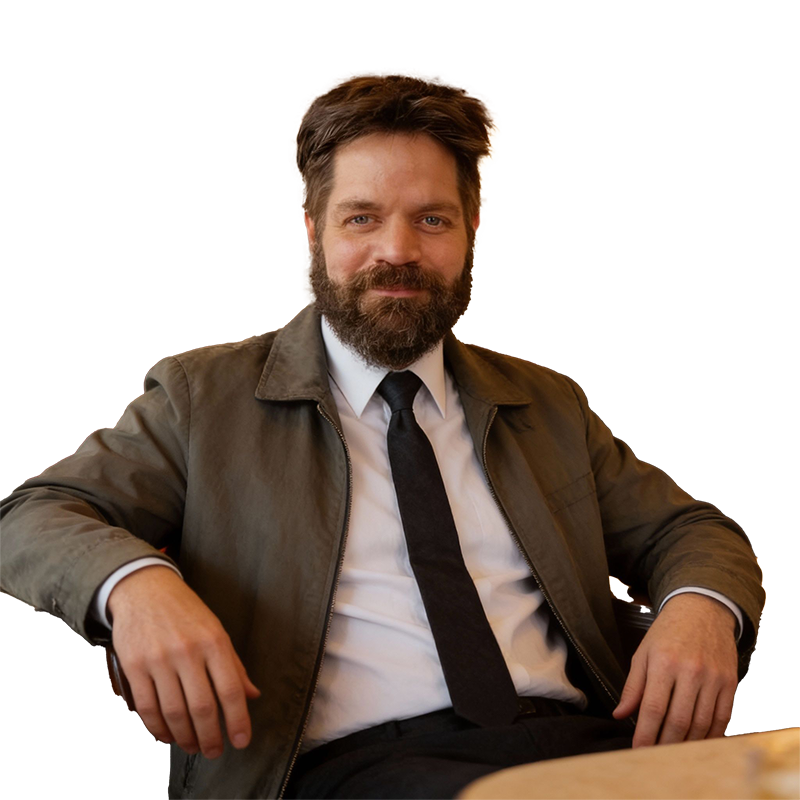
Rich Bergeron, author and investigative storyteller, channels lived experience into narratives that expose truth and inspire change.
A Journey Through Truth, Trauma, And Transformational Storytelling
Rich Bergeron discusses transforming personal tragedy into powerful storytelling, balancing truth with creativity, and using narrative, mentorship, and advocacy to illuminate addiction, justice, and human connection.
R ich Bergeron stands as a formidable voice in contemporary narrative craft—an author whose work does more than tell stories; it confronts truth, wrestles with human complexity, and ultimately transforms lived experience into something enduring and deeply resonant. With more than twenty-five years devoted to the written word, Bergeron has cultivated a rare synthesis of journalistic rigor and creative instinct, producing work that is as precise as it is profoundly moving.
What distinguishes Bergeron is not simply his technical command—though his mastery of long-form storytelling, ghostwriting, and editorial development is undeniable—but his fearless commitment to emotional authenticity. His narratives do not shy away from discomfort; instead, they move directly through it, illuminating the often-overlooked spaces of grief, resilience, addiction, and redemption. There is a palpable honesty in his voice, shaped by personal history and sharpened by professional discipline, that invites readers not just to observe a story, but to feel it.
His body of work reflects a writer who understands that storytelling is both an art and a responsibility. Whether exploring the intricacies of human struggle or exposing hard truths through investigative platforms, Bergeron consistently demonstrates that powerful writing must do more than entertain—it must connect, challenge, and, at times, unsettle. His projects, particularly those rooted in advocacy and mentorship, reveal a deeper mission: to use narrative as a vehicle for healing, awareness, and change.
In this interview, Bergeron offers an unfiltered look into the philosophy and process behind his work. His reflections on balancing fact with feeling, discipline with creativity, and structure with experimentation provide invaluable insight for both aspiring writers and seasoned professionals. More importantly, they underscore a central truth that defines his career: the most impactful stories are those grounded in honesty, shaped by experience, and told with unwavering conviction.
How did your career in journalism and narrative storytelling begin, and what inspired you to pursue this path?
A. I read voraciously as a child. I was the only kid in class who actually enjoyed reading out loud in Cahtholic school. I also had plenty of tragedies that shaped my youth, none more than the death of my mother when I was just six years old. Finding out she was a writer and a nurse drove me to do the writing she couldn’t do with the time I had left that she didn’t.
My best writing as a teen came from confronting that gaping, catastrophic loss my mother’s death represented. I also had to go back over all the gritty, ugly details of how she died in a court case that unfolded during my high school years. My family sued the main doctor who treated my mother for negligence.
Complicated legal matters and highly dramatic literary pursuits have defined my career and my life thus far. But it’s all based on the raw, real, emotional state of being human.
What is your process for transforming raw life experiences into emotionally resonant and polished narratives?
A. I strongly believe in the old quote: “Good artists create. Great artists steal.” I also don’t like stuffy, traditional writing. I break the rules when I can for effect. I tap into motivations, personal character, history, and subject matter when I tell a story. I cover every angle I can.
Can you share some challenges you’ve faced while co-authoring books at the Magical Journey Network?
A. Getting the vision off the ground in the early stages of this seems daunting. We’re trying to be the standard bearer for mentorship. We’re trying to tell an incredibly vivid story of addiction and pain leading to recovery and healing over four non-fiction volumes. The most significant challenge I face is doing the story justice and putting out a literary product I can be proud of that will truly help all the people who read it.
How do you balance journalistic precision with the emotive aspects of transformational storytelling?
A. Sometimes a memorable quote in a story is better coming from your own imagination instead of real life. Sometimes a critical moment of childhood development is too painful to relive for an interview subject, and you have to put yourself in his or her shoes and speculate. I pride myself on how accurate my storytelling is and how closely I typically stick to the facts, but sometimes a little embellishing goes a long way without obscuring the underlying moral of the story.
What role do mentorship and human connection play in the storytelling approach of Magical Journey Network?
A. Human connection is the goal of mentorship. It’s also the goal of recovery. Many addicts tend to hide their addictions and wallow in quiet shame. They don’t want anyone to know who they really are. Each of us has to be proud of our contributions to the world to really achieve happiness in life. Human connection, like what happens in AA meetings, can be massively instrumental in dragging another person out of despair. Seeing someone else who is literally feeling your pain can be life-changing. One thing we stress at Magical Journey Network is that nobody gets out of the abyss alone. It’s not a do-it-yourself situation. The same can be said about storytelling. You can’t tell any good story without involving well-developed characters that readers can relate to. Those human connections between those characters are the heart of every decent story ever told. Mentorship built this story and demands that this story be a clarion call to readers to become mentors themselves or seek mentors out for help.
Could you share insights into crafting stories that explore complex themes like addiction, identity, and redemption?
A. Sometimes chronological order is overrated. Drama rules the roost in writing, so throw the reader off with flashbacks, looks ahead, recurring themes, and shifting the real timeline around for effect.
You can’t just tell your readers that your main character hit “Rock Bottom” to write a great story about addiction. That bland description won’t help you continue the ensuing powerful narrative about identity and redemption that typically follows an addict’s successful recovery. Instead, you have to show what rock bottom really entails in raw, horrific, and extremely meticulous detail. The cold sweats. The shakes. Being painfully sober and opening your eyes to the deep hole you’ve put yourself in thanks to your addiction.
How has your work with publications such as The American Legion Magazine and Ultimate MMA influenced your narrative style?
A. Getting published in magazines can sometimes be a challenge. You have to bring exactly the right content at exactly the right time to qualify for publication in most magazines. The American Legion story was the only magazine article I was actually personally recruited for. I wrote one major article for them that paid well and came out as a central feature of the edition it appeared in. I enjoyed working with the editors there to present Frank Zalot’s miraculous wartime story. I worked with the MMA magazine for a longer term, interviewing multiple fighters for feature stories. Talking to fighters frequently reminds me of my own fighting spirit. Storytelling can sometimes be a fight, too. Especially when you are a perfectionist like I am.
What drives your passion for helping individuals and organisations “tell the truth well,” and what does that mean to you?
A. One of my favorite sayings is “the truth will shine through in the end.” I went to three different military schools in my college years (Air Force Academy, Norwich University, and Virginia Military Institute), and all of them observed an “honor code” where lying, cheating, and stealing were all strictly forbidden and could see you removed from the school entirely. I consider my integrity to be my most admirable quality.
How do you ensure that the values of honesty, presence, and lived experience are reflected in your work?
A. I have always gone out of my way to be as honest as possible in life, and that transcends into my writing style as well. It also feeds my desire to expose hard truths people have been lying about or covering up for generations.
Which of your individual projects or stories has had the most profound personal impact on you, and why?
A. Planbjustice.com gave me an avenue to express my creativity that was perfectly tailored to my talent. It showed me that I could tackle tough local political stories and get people talking: from the base citizen and taxpayer to the highest levels of local and state government leadership. The site is one of my most popular outlets, because it highlights the poignant stories of select groups of dedicated locals who all wanted the world to know about all the shady things going on behind the scenes in their municipalities. The crooked lawyers I exposed on the site ended up facing real consequences for their actions and inactions. I received the best possible feedback for my efforts to explain small-town scandals there.
How do you approach the legal and grant writing aspects of your role while maintaining focus on the creative storytelling side?
A. Knowing the legal and grant side of writing can be the difference between success and failure. Where technical stuff might put a sour taste in the mouth of other writers, I enjoy learning the process of grant writing and the science of grant seeking. Also, it is always good to have a solid familiarity with the legal framework that surrounds the writing profession. There are contracts, royalty agreements, copyrights, intellectual property disputes, and a whole host of other legal issues that are critical to understand in a writer’s career. If you’re tackling subjects that could easily turn the public against a group or individual, the interest you’re attacking typically finds a way to bring you to court. Knowing how to represent myself in court and how to avoid putting out facts I can’t prove keeps me from worrying about anyone who might challenge my writing.
What advice would you give to aspiring authors and narrative strategists who aim to create meaningful, lasting stories?
Just ask the right questions. Tap into emotions. Too many writers get caught in a cycle of not being descriptive enough. Anyone can tell a story, but a great writer can show how a compelling story actually unfolds bit by bit and piece by piece.