













Jaime Jo Wright Weaves Faith, Love, and Haunting Suspense in Gothic Fiction

Photo: Award-winning author Jaime Jo Wright, celebrated for her gothic suspense novels exploring love, loss, and faith with emotional depth.
Exploring Identity Memory And The Supernatural Through Compelling Storytelling
Jaime Jo Wright discusses how her adoption, faith, and life experiences inspire gothic suspense novels, blending dual timelines, psychological depth, spiritual themes, and haunting explorations of love, loss, and identity.
J aime Jo Wright writes with a rare combination of emotional depth, spiritual insight, and gothic intrigue, establishing herself as a distinctive voice in contemporary fiction. Wright opens up about the personal experiences and spiritual reflections that shape her work, revealing how her stories delve into the shadowed corners of the human soul while offering glimpses of hope.
In an interview on Mosaic Digest, Jaime’s latest novel, Tempest at Annabel’s Lighthouse, exemplifies Wright’s masterful blending of dual timelines, psychological suspense, and deeply personal themes. The novel draws inspiration from literary classics, particularly Edgar Allan Poe’s “Annabel Lee,” while remaining firmly grounded in lived experience. Wright’s characters are raw and complex, reflecting both human fragility and resilience, leaving an indelible mark on readers.
Wright’s writing is distinguished by its honesty in confronting difficult truths. Her novels do not shy away from grief, loss, or the lingering questions of faith; instead, they embrace these tensions, providing a narrative space where fear and faith coexist. For Wright, hope is never a cliché—it is a hard-won truth emerging from life’s trials. This authenticity has cultivated a loyal readership who find not only suspense but also reflection and meaning within her work.
Jaime Jo Wright masterfully blends emotional depth, gothic suspense, and spiritual insight, creating unforgettable, hauntingly beautiful stories that resonate deeply with readers.
In discussing Tempest at Annabel’s Lighthouse, Wright explains that themes of identity and love are rooted in her own life. Having been born into the foster care system and adopted as an infant, Wright reflects that her sense of identity has long been intertwined with questions of belonging and the forms of love she has experienced. “There are different forms of love… sacrificial love, yet also obsessive and narcissistic love,” she notes. These experiences of love, both positive and negative, inform the emotional undercurrents of her storytelling, explored safely within the confines of fiction.
“There are different forms of love… sacrificial love, yet also obsessive and narcissistic love.”
– Jaime Jo Wright
The gothic tone of her novel is inspired by Poe’s “Annabel Lee,” a poem that Wright finds universally resonant due to its portrayal of brokenness, grief, and haunting love. Setting the novel in a lighthouse on the shores of Lake Superior allowed her to explore these themes within a place rich with history and folklore. Wright’s personal connection to the lake, where she spent time as a child, deepened her portrayal of the landscape, which almost becomes a living character in her narrative.
“Hope isn’t something often merged with the concept of horror or darkness, but I believe…it is because of my personal faith—that hope is given by our Creator.”
– Jaime Jo Wright
For Wright, suspense is heightened when it intersects with the psychological and spiritual dimensions of her characters. “It’s one thing to run from a killer, but an entirely other thing to be haunted by one’s memories—or lack thereof,” she explains. This blending of tangible suspense with a soulful journey allows readers to experience both the thrill of a gothic mystery and the introspective depth of human emotion.
Faith is inseparable from Wright’s creative process. Her novels often explore the boundary between the spiritual and the supernatural, reflecting her belief that hope exists even amid fear. Wright sees faith as a lens through which to explore human suffering and resilience. “Fear and faith are intertwined,” she says. “Hope is given by our Creator and accessible, even in the midst of darkness.” This spiritual perspective enriches her storytelling, giving it both weight and nuance.
Wright’s commitment to portraying complex, realistic characters has resonated strongly with readers. Her novels feature protagonists who face mental health challenges, chronic illness, autism, abusive pasts, and broken relationships, giving representation to experiences often overlooked in fiction. Readers respond to the authenticity of these characters, reinforcing Wright’s belief in the power of narrative to illuminate the human experience. She continues to explore profound questions such as, if God is good, why do bad things happen, offering both suspense and reflection in equal measure.
Jaime Jo Wright’s novels are more than stories—they are immersive explorations of memory, identity, and love, framed within suspenseful and gothic narratives. By drawing from her own life experiences and spiritual convictions, she creates literature that resonates deeply, blending emotional intensity, psychological insight, and haunting beauty. Her work exemplifies the transformative power of storytelling, leaving readers both captivated and contemplative long after the final page.
Editor’s Note
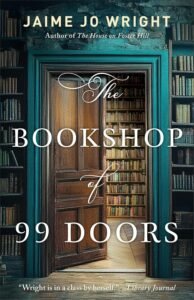
The Bookshop of 99 Doors is a masterful, suspenseful Gothic mystery—haunting, beautifully written, and utterly captivating from start to finish.
The Bookshop of 99 Doors is a gripping Christian Gothic mystery that weaves suspense across two timelines. The haunted Pennsylvania mansion, with its rumored hundredth door, creates a chilling atmosphere as Minnie and Triss confront dark secrets, vengeful spirits, and personal fears. Wright masterfully blends historical intrigue with modern-day tension, keeping readers on edge. A beautifully crafted story of mystery, faith, and courage that lingers long after the last page.