














Neil Perry Gordon Takes Readers on a Journey Through History and Metaphysics
Discovering The Depths Of History, Identity, And Transformation
Neil Perry Gordon explores the interplay of history and metaphysics in his storytelling, inviting readers to reflect on their journeys through the Soul-Line.
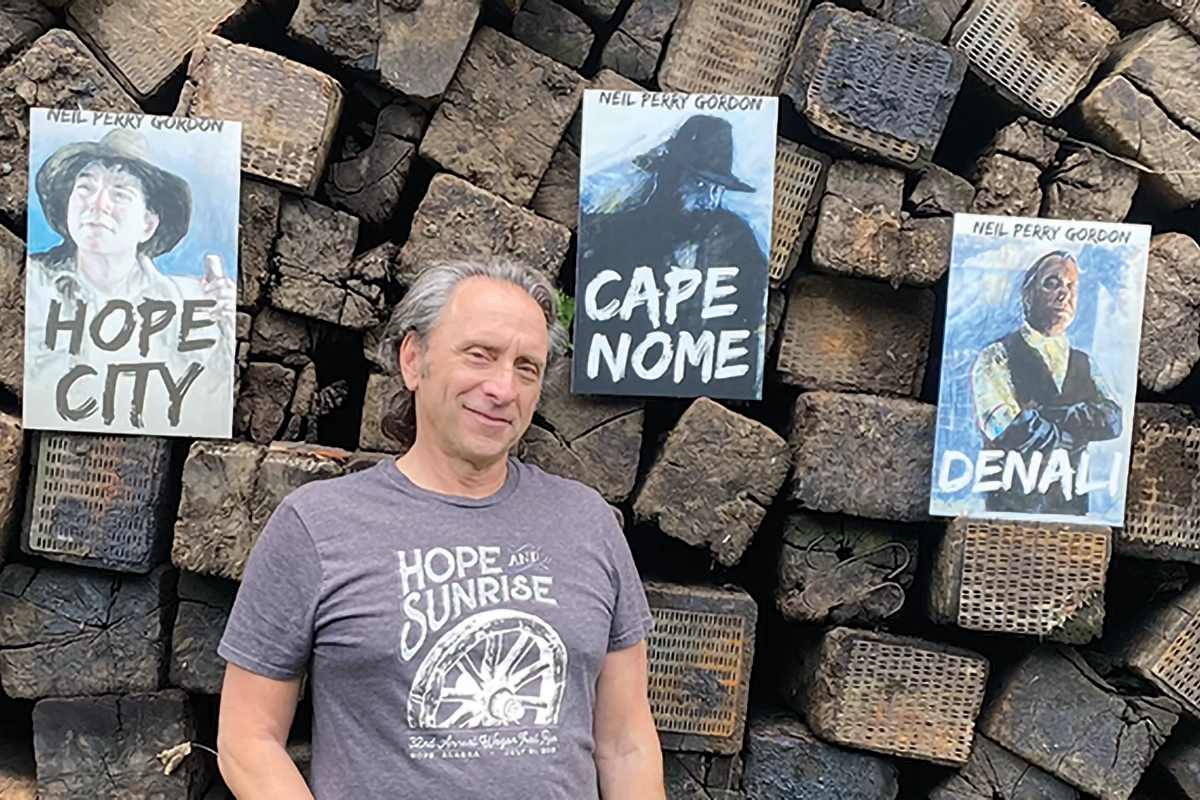
N eil Perry Gordon is not merely an author; he is an alchemist of words, a storyteller who intricately weaves time, space, and the unseen into a narrative tapestry that is both profound and deeply human. His mastery of historical fiction and metaphysical fantasy is truly remarkable, offering readers not only entertainment but also insights into the mysteries that shape human existence. With over a dozen novels to his credit, including the celebrated The Wizard of Hope: The Alaskan Adventures of Percy Hope, Gordon has established himself as a distinct voice blending rigorous historical research with the expansive realm of speculative inquiry. His work, intellectually engaging and emotionally resonant, stands out in today’s literary landscape.
In an illuminating interview published by Mosaic Digest, Gordon opened up about his unique creative process, the philosophical underpinnings of his novels, and the profound interplay between past and present. He explains that his fascination with history stems from its capacity to leave an imprint on the present, likening it to an inheritance that transcends mere family lineage. Gordon is particularly captivated by what he terms “Soul-Line”—the continuity of memory, conscience, longing, and unresolved vows that traverse time and manifest in new forms while retaining core questions essential to the human experience.
As Gordon describes it, metaphysics emerges when one begins to understand that human identity possesses depth beyond mere biography. Speculative inquiry, he asserts, allows novelists to probe these depths. “What if the true lineage isn’t blood at all, but the continuity of a soul trying, over and over, to become more fully human?” This philosophical questioning fuels his narratives, inviting readers to ponder their own journeys of transformation.
The research process for Gordon’s historical fiction is meticulous. He begins with what he terms the historical “hinge,” a pivotal moment where choices have significant consequences. From there, he constructs a vivid understanding of the era, ensuring the facts regarding geography, language, and daily life create a trustworthy backdrop. However, he also strives to tap into the less tangible elements of history—the moral assumptions, fears, and collective dreams of the time—bringing a rich depth to his characters and their experiences.
In discussing the character of Percy Hope from The Wizard of Hope, Gordon reveals that Percy originated as a legend, embodying the essence of oral history. This approach allowed him to explore a character shaped by both external wilderness and internal struggles, resulting in a narrative that delves into questions of existence and identity. In this way, Percy becomes a vital vessel for exploring the Soul-Line theme as he navigates the complexities of life in early 20th-century Alaska—a setting that for Gordon acts as an initiator in its own right.
Alaska’s unique environment—its distance, coldness, and primal beauty—affects not just the physical journey but the emotional landscape of his characters as well. According to Gordon, the challenges presented by such a landscape reveal deeper truths about human nature and transformation.
Balancing historical accuracy with supernatural elements poses another intriguing challenge for Gordon. He emphasises creating a solid historical foundation while allowing metaphysical elements to act as an enriching layer that enhances the realism of the narrative. The supernatural, for him, serves as a means of dramatizing the unseen currents of life that often influence human behaviour, urging characters toward transformation.
Gordon further articulates the profound role of storytelling in human experience. He posits that a good story not only informs but also reshapes our perception of what is possible. “At its best, narrative becomes a mirror and a map: it reflects who we are, and it hints at who we could become,” he asserts.
With over a dozen novels behind him, Gordon acknowledges his growing commitment to precision in writing. His focus has shifted towards crafting narratives that seamlessly blend entertainment with deeper themes of transformation, thereby allowing readers to emerge subtly altered after engaging with his work.
In summary, Neil Perry Gordon leaves readers with a compelling message: respect the hidden architecture of life, where deeper plots related to conscience, memory, and destiny continuously unfold beneath the surface. His advice to aspiring authors is to earn the reader’s trust with authenticity, allowing metaphysical themes to emerge organically through storytelling, ultimately grounding the unseen in relatable emotions.
Neil Perry Gordon’s work is a masterclass in blending history and metaphysical inquiry, inviting readers to explore the intricacies of the human experience while tracing the invisible threads that connect us all.