







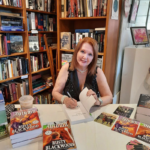




Nicole Knapp Redefines Dark Fantasy With A Hauntingly Lyrical Vision Of Neverland And Beyond
Music, Memory, And The Art Of Storytelling
Nicole Knapp discusses her Hook & Crown duology, exploring a dark Peter Pan retelling, trauma-driven character arcs, morally grey storytelling, lyrical prose, and creative inspiration drawn from music and personal experience.
N
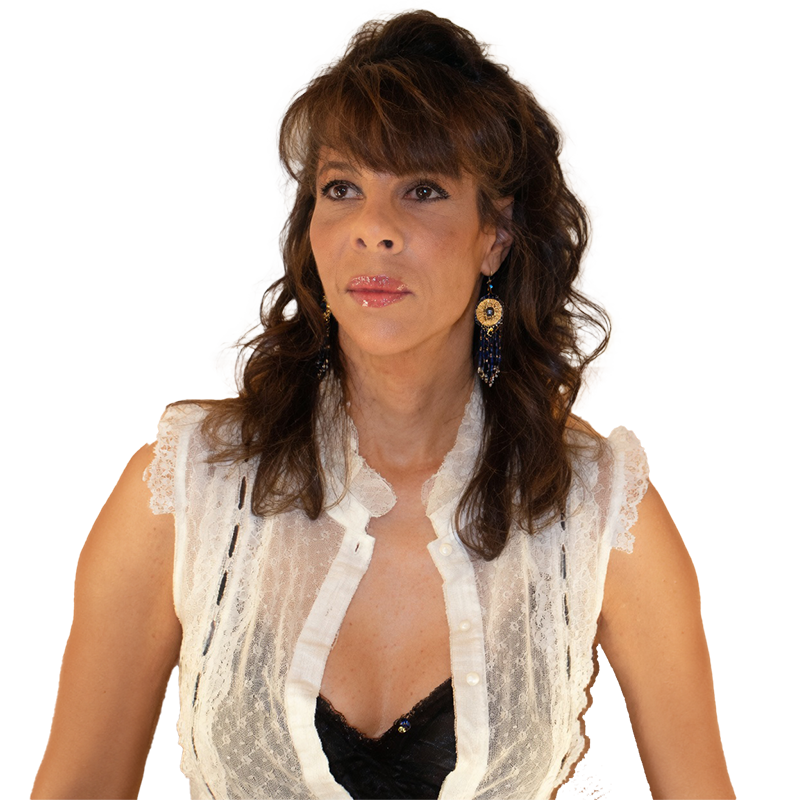
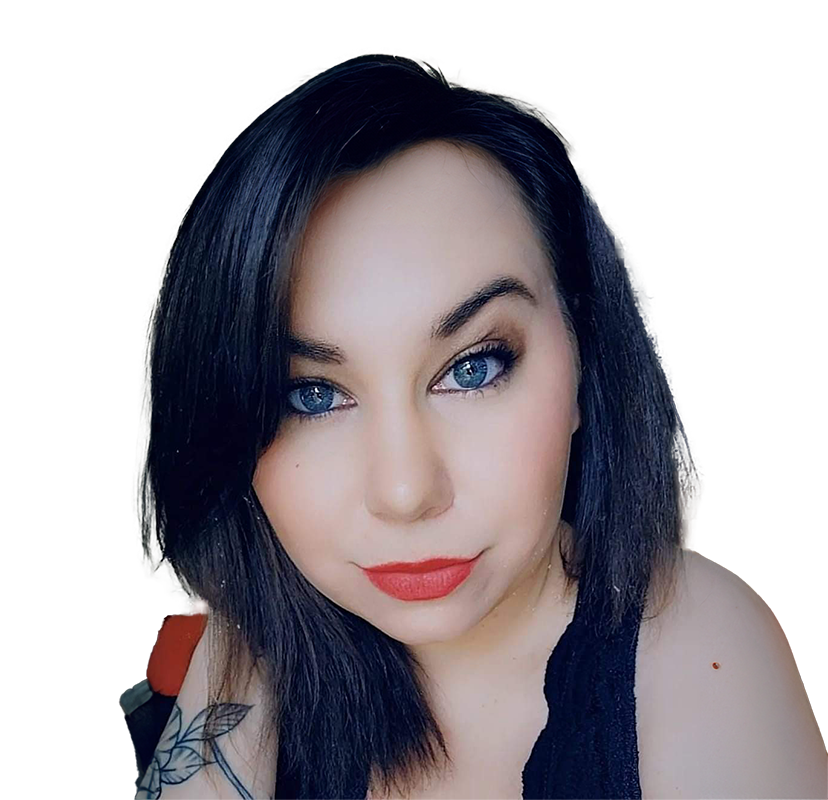
icole Knapp has carved out a distinctive space in contemporary fantasy fiction with her hauntingly lyrical storytelling and fearless approach to reimagining beloved mythologies. Best known for her bestselling Hook & Crown duology, Knapp transforms the familiar world of Peter Pan into something far darker, more intricate, and emotionally resonant, proving her ability to balance nostalgia with bold creative reinvention. With Hook & Crown and its sequel Stars & Steel, she has established herself as a writer unafraid to explore the uneasy intersections of innocence and brutality, love and destruction, fantasy and psychological realism.
Across both novels, Knapp’s Neverland is not merely a setting but a living, breathing force—one shaped by moral ambiguity, fractured loyalties, and the lasting impact of trauma. Her characters linger with readers long after the final page, not because they are easily defined, but because they resist simplification. It is this complexity, paired with her evocative, music-like prose, that has earned her comparisons to some of the most compelling voices in modern dark fantasy while still remaining unmistakably her own.
As she continues to expand her creative world with new horror projects and an ambitious romantasy standalone, Knapp remains firmly rooted in the emotional honesty that defines her work. This interview offers a closer look at the mind behind Neverland’s shadows and stars—an author who continues to challenge the boundaries of retelling, while reminding readers why some stories demand to be revisited, reimagined, and retold through a darker lens.
Nicole Knapp masterfully blends lyrical prose, emotional depth, and dark imagination, redefining fantasy retellings with bold originality and intensity.
What first drew you to the mythos of Peter Pan and inspired you to give it such a dark, twisted reimagining?
Peter Pan was my favorite Disney movie as a child. As I got older, I read the original story, and I realized how different it was from the Disney version. I saw that the original was actually quite a dark story, and there was room to make it even darker. From that thought process, Hook & Crown was born.
“Everything has already been written, but it hasn’t been written by you.”
– Nicole Knapp
Elena undergoes a significant journey from the boarding school in London to the dangers of Neverland; how did you approach developing her character across the duology?
When I started writing Hook & Crown, I wanted Elena to feel authentic, rather than just a character. I wanted her to really feel all of the emotions and react how a normal teenage girl might act when thrown into a crazy situation with beautiful boys fighting over her. In the sequel, Stars & Steel, I tried to push her character even further, creating more traumatic situations and allowing Elena to evolve organically with the story.
The transition from Hook & Crown to Stars & Steel involves characters dealing with trauma and nightmares; how important was it for you to explore the psychological aftermath of their first adventure?
In Stars & Steel, both Elena and Will are essentially traumatized by everything they went through in book one. I wanted their pain and their trauma to feel real and to push them out of their comfort zones in order to show growth in their characters. One of my main goals with book two was to hone in on all of that and show readers that trauma and pain are messy, hard to overcome, but are catalysts for growth. Admittedly, I was going through a very dark time in my own life while writing Stars & Steel, and I pulled a lot from what I was feeling myself, and let it bleed into my characters.
“In Neverland, everything begins and ends with stars and steel.”
– Nicole Knapp
In your version of Neverland, the line between heroes and villains is intentionally blurred; which character was the most challenging to write in that moral grey area?
Will was definitely the hardest character to write in a morally grey hue. Deep down, Will is just a softie, a big lover boy. And keeping his morally grey aspects was really hard for me, especially because Captain Hook is a well known villain. It was difficult to keep from swaying too far to either end of the spectrum.
How does your personal life in New York City or your passion for music influence the atmosphere and rhythm of your storytelling?
In my opinion, both music and writing books are forms of storytelling. As someone with a crazy passion for both music and reading, I’ve always been attracted to lyrical prose, and I like to think my writing reflects that same lyrical quality that I’m such a fan of.
Your work is often compared to other modern retellings like Lost in the Never Woods; what do you feel sets the world of Hook & Crown apart from other interpretations of the source material?
This was an especially hard part of the process of writing the Hook & Crown duology. It feels like in our current world, nothing is original anymore. But I was determined to write my own version of Neverland, so I sat down and brainstormed how to make my version stand on its own. The thing I landed on was the dynamic between Will and Aiden. I had never heard of another retelling that made the Peter Pan and Captain Hook characters siblings, so I ran with it. I felt like it gave a fresh take on the story, and opened up a way to take the story on a darker path.
The sequel’s title, Stars & Steel, feels very evocative; could you explain the significance of those two elements in the context of the story’s conclusion?
Stars have always been significant to the story of Peter Pan; second star to the right and straight on til morning. In Hook & Crown, I wanted to add to that. In the books they fly directly into a star to get to Neverland, essentially live amongst the stars, and the stars are a portal to and from Neverland. The steel comes from Will and Elena literally fighting for their lives and the violence that occurs in book two. In Neverland, everything begins and ends with stars and steel.
Music collection building is mentioned as one of your favourite pastimes; do you have a specific playlist or genre that helped you tap into the “dark and gritty” tone of these books?
I do! I’m an elder emo at heart, so listening to dark, screamy, hard music got me into the perfect headspace to write this type of story. I listened to a lot of Dance Gavin Dance, Sleep Token, Bring Me The Horizon, and classical music to write to.
Looking back at the release of the first book in 2019, how has your relationship with these characters evolved now that the duology is complete?
These characters and this world are so incredibly special to me, even years later. I’ve been asked many times if I would ever revisit this world, whether for a prequel or a spin-off of some sort, and the answer is…yes. I would honestly love to go back to Neverland and explore more. Maybe after I finish my current projects I’ll let this world out to play again.
If you could spend a day in your version of Neverland without the threat of death, which location on the island would you most want to visit?
Hands down, the Fairy Tree. That was one of my favorite scenes and locations to write out of the entire duology. Willis ship would be my next choice.
What are your top three technical writing tips for aspiring authors who want to master the art of the “plot twist” or “cliffhanger”?
Mastering the art of the “gotcha” moment requires more than just a sudden surprise, it requires a delicate balance of psychological manipulation and structural precision. My advice for aspiring authors would be…
One: A great plot twist should feel surprising yet inevitable. If a reader looks back, they should see the clues were hiding in plain sight. Two: Cliffhangers often fail because they feel like a cheap “to be continued” sign. To make them effective, you need to resolve one tension while simultaneously introducing a massive, unforeseen one. Three: The physical structure of your prose dictates the reader’s heart rate. As you approach a twist or a cliffhanger, your syntax should sharpen. Leading up to the reveal, shorten your sentences and paragraphs. This increases reading speed and creates a sense of urgency.
What piece of advice would you offer to aspiring authors who are struggling to find a unique angle for a retelling of a classic fairy tale?
This is something I struggled with when writing Hook & Crown. It might feel like everything has already been written, or like there’s no way to make a classic fairy tale your own. But while it may have been written before, it hasn’t been written by you. Everyone has their own unique voice and interpretation of the classics, so don’t be afraid to write a retelling.
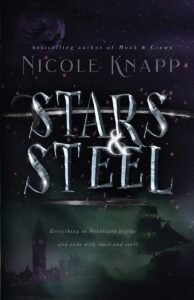
Editor’s Note
A thrilling, emotional finale with gripping twists, vivid worldbuilding, and unforgettable characters that reimagine a classic tale in bold, exciting ways.
Stars & Steel delivers a imaginative finale to the duology. Nicole Knapp deepens Elena and Will’s struggles with trauma while pulling them back into a darker Neverland filled with danger and moral complexity. The pacing is sharp, the twists engaging, and the emotional stakes satisfying, making this a compelling, bittersweet conclusion for fans of reimagined fairy tales.