











Marie Lu Says When Magic Meets Capitalism Nothing Good Happens

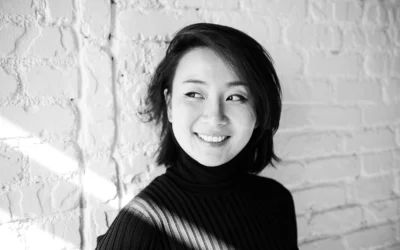
Marie Lu, New Tork Times bestselling author, reimagining magic and morality in her powerful storytelling journey, photographed at her Los Angeles home.
Exploring Power, Identity, And Morality Through Dystopian Worlds And Imaginative Fantasy
Marie Lu discusses her creative process, transitioning from young adult to adult fiction, crafting immersive worlds, and exploring themes like identity, power, and morality in her latest book Red City.
Marie Lu is a storytelling powerhouse whose name has become synonymous with inventive worlds, compelling characters, and gripping narratives. As the No. 1 New York Times bestselling author behind the Legend series, Warcross, The Young Elites, Skyhunter, and her most recent masterpiece, Stars and Smoke, she has captivated readers of all ages with tales brimming with tension, heart, and unparalleled imagination. With her signature ability to meld high-stakes action with raw emotional depth, Lu has firmly established herself as a literary luminary within both young adult and adult fiction.
Known for her vivid world-building and deeply human characters, Lu has consistently explored themes of identity, power, loyalty, and the complexities of morality. Her storytelling transcends genres and audiences, as her characters navigate intricate relationships, wrestle with their own flaws, and battle forces both external and internal. With a background as an artist in the video game industry and her profound love for fantasy and science fiction, she brings a visual richness and cinematic tension to her prose, making her books an exhilarating experience.
In our illuminating and inspiring conversation with Lu, we delve into her creative process, the challenges of transitioning between young adult and adult fiction, the alchemical fantasies of her latest book Red City, and her evolving role as a writer navigating the ever-complex interplay of identity and power. Whether you’re an ardent fan or a budding writer looking to glean wisdom from an icon, this interview is a treasure trove of insights from a storyteller who continues to shape and reshape the literary landscape.
Highlights from the interview:
- Insight into Red City’s alchemical fantasy inspired by real-world power imbalances.
- Challenges of transitioning from young adult to adult fiction.
- Creating morally complex characters like Sam and Ari.
- Balancing action and emotional depth in narratives.
- Remarkable research approaches for immersive world-building.
- Advice to aspiring authors in dark fantasy and dystopian fiction.
What inspired you to write “Red City” and explore the concept of alchemy as a central theme?
I’ve always wanted to write an urban fantasy that explores our world’s power and class imbalances through the lens of magic, so for years, I had the idea of Sam, her mother, and the syndicates, all set in an alternate version of Los Angeles (my hometown). But it took me a long time to find the magic system that would work for that kind of story. Then, several years ago, I had the privilege of taking a summer course at Oxford University. While I was browsing inside the Bodleian libraries there, I happened upon a textbook about the history of alchemy. That was the moment I realized that alchemy would make the perfect fantasy metaphor for what I wanted to write–the ruthless pursuit of perfection, made literal through the process of changing something into something else.
“What happens when magic meets capitalism? Nothing good.”
– Marie Lu
How did your transition from young adult fiction to adult fiction influence your creative process?
I found the transition quite difficult, to be honest. YA fiction is such an immediate and intimate form of storytelling, and for me, that usually meant writing linearly from a first person POV and severely narrowing the scope down to one or two characters. Adult fiction, however, allows the exploration of character and story through long stretches of time–years or even decades, with larger scope. I found myself writing scenes out of order and exploring the story from POVs that I wasn’t used to writing–from Sam’s mother, for instance, and the POVs of older adults. It’s a creative shift that I’m still getting used to.
Can you share how you developed the complex dynamics between the rival syndicates, Grand Central and Lumines?
A lot of that came out of the differences between Sam and Ari’s experiences with each syndicate, where Sam is trying hard to get into an organization with closed walls, while Ari is forcibly taken to join one. Grand Central, therefore, is a syndicate that thrives on selling a very exclusive version of the magical drug sand, while Lumines is ambitious and eager to expand, to step on anyone in their path. My goal was to have their dynamic mirror the dynamic of our real world’s most powerful corporations, who are willing to be careless and ruthless in their pursuit to beat each other. What happens when magic meets capitalism? Nothing good.
What unique challenges did you face in creating the world-building for “Red City”?
The biggest benefit of urban fantasy is also, to me, its biggest challenge: how to build a convincing magical overlay on top of our existing reality. I loved being able to use real places and cultures for the scaffolding of the magic system, but that also meant adhering to rules that make sense in our world–how would alchemy work in our modern society, and who would benefit the most from it, and how would people in our real world use it, and how would that reshape real cities and cultures? I can’t just make things up 100% the way I’d do for a high fantasy. But limitation also tends to breed creativity, so the challenge was fun.
How do you approach writing morally complex characters like Sam and Ari?
I always go into building every character–even villains–as if they are the heroes of their own stories. We are all morally complex, in our own ways, so my goal was to make sure Sam and Ari’s motivations always felt relatable, even when they were doing despicable things. This meant making sure they had tendencies that most people could relate to–loving their families, wanting to take care of their loved ones, wanting to be seen and loved, wanting to succeed in life, etc. Then I’d think of situations that would test each of those tendencies. What would we do, when pushed to our limits? When tempted? When threatened? Can that be understandable to the average person?
Was there a specific moment or idea that sparked your journey into storytelling as a career?
I’ve loved writing stories since I was very little, but I was 13 when I realized that being a writer was an actual job and that novels were written by real people. I still remember reading an article in our local paper that year about a 13-year-old girl named Amelia Atwater-Rhodes who had gotten her first book deal with a major book publisher. I thought, “Wow, she’s the same age as me! And her novel is going to be in bookstores!” That was the moment when I realized there was no job I wanted more than to be a published writer.
How do you balance action-packed plots with emotional depth in your narratives?
Action is meaningless and boring if it happens to characters that no one cares about, so my goal is always to build up enough of my main characters for my reader before putting them into a high-action scenario. With every scene, I ask myself if it’s either deepening a character’s arc or leading them into another scene that will deepen that arc. I believe people are much more forgiving of plot if they love your characters, so I try to let character building lead the action sequences.
What role do you see identity and power playing in your storytelling across all your books?
I’ve written enough books now that I can see some patterns emerging in my themes. One of those themes is how identity and power are inversely related: power requires sacrifice, and the more power you gain, the more of your identity you lose. This was an internal battle that played out with Day and June in Legend, as well as Adelina in The Young Elites and Hideo in Warcross. It is central to the plot in Red City for both Sam and Ari. I think I’m haunted by what this inverse relationship does to our own world–what people are willing to give up of themselves in order to succeed, to get ahead, and to “win.”
Who are your literary influences or favorite authors that shaped your storytelling style?
Growing up, my favorite author was Brian Jacques (Redwall). His books were my gateway into all fantasy and science fiction, and I mourn that I was never able to meet him before he passed away. Other huge influences on me are Jacqueline Carey, Barbara Kingsolver, N.K. Jemisin, and Suzanne Collins.
How do you stay inspired and avoid creative burnout during long projects?
No matter how busy I get, I try very hard to keep a strict writing schedule and do not let myself venture outside of those set hours. I do not write on weekends or evenings, even when I’m on deadline, as those times are reserved for my family and myself. I also force myself to keep absorbing other creative things when I’m drafting–movies, shows, music, etc. The creative brain needs rest in order to work, and forcing it to churn all day and night is counterproductive. This is all easier said than done when I have tangible deadlines I need to hit! But I do try very hard to keep to it.
Could you share a bit about your research process for creating such detailed and immersive worlds?
It varies with each project! With Red City, I read as many books as I could on alchemy, chemistry, and other sciences (astronomy, quantum physics, much of which went right over my head!), as well as articles about corporations/the stock market/our capitalist world. For The Kingdom of Back, a historical fantasy about the Mozart siblings, I read as many biographies as I could find about Nannerl Mozart as well as used a ton of Google Maps for Salzburg and Vienna. For Warcross, which is very near future science fiction (and now basically just contemporary fiction), I followed much more immediate information, like articles in Wired magazine about the latest technology on the cusp of emerging, or news about tech companies and what they were preparing to do. I try to go where the worldbuilding requires.
What advice would you give to aspiring authors, especially those looking to write dark fantasy or dystopian fiction?
Dark fantasy and dystopian fiction is almost always a lens to our own world. So definitely pay attention to the complex structures that govern our own society and power us as real people, read as much as you can about it, and then figure out what aspect of it you’d like to exaggerate in fiction. What haunts you about the human condition? What keeps you up at night? Use that as creative fuel and think of how it can be the foundation for something fantastical.
Editor’s Highlight
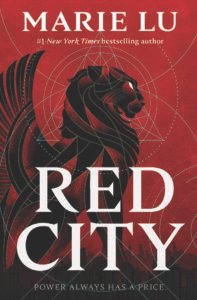
Marie Lu’s Red City is a gripping blend of magic, ambition, and betrayal, set in a dazzling alternate Los Angeles.
Marie Lu’s Red City is a spellbinding fusion of crime and fantasy, set in a dazzling yet dangerous alternate Los Angeles. With its gritty, high-stakes world of magical alchemy, rival syndicates, and star-crossed allies-turned-enemies, this gripping tale is perfect for fans of V.E. Schwab. Lu crafts a captivating story of ambition, loyalty, and transformation through Sam’s and Ari’s tragic paths, where love collides with power. The thrilling mix of magic, suspense, and emotional conflict leaves a lasting impression. A dark and compelling start to the Red City series.