





Riveting Journeys And Environmental Consciousness With Author And Filmmaker Oriane Livingston
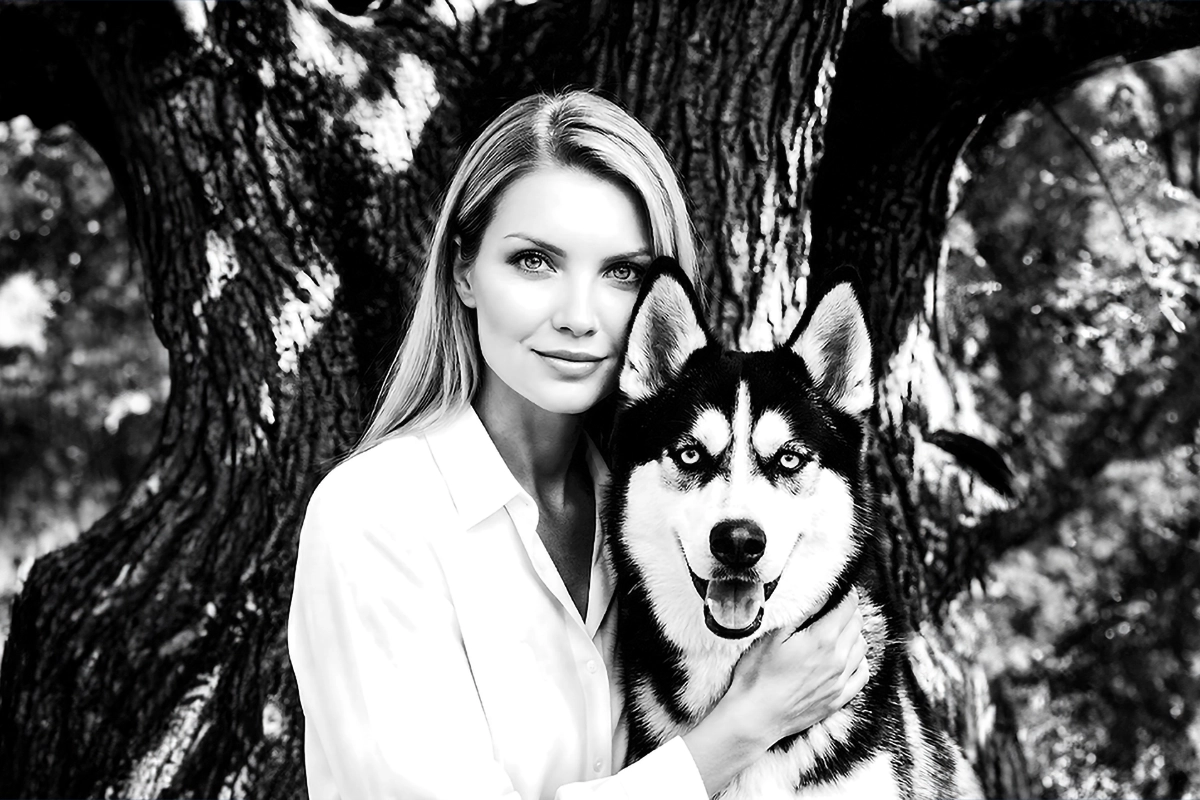
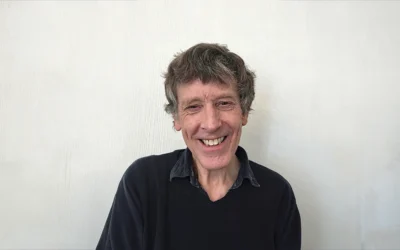
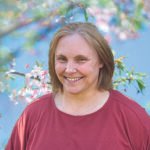
Oriane Livingston, award-winning novelist and filmmaker, inspiring readers with her captivating storytelling and passionate environmental vision.
How Storytelling And Activism Inspire Oriane Livingston’s Creative Vision
Oriane Livingston, acclaimed novelist and filmmaker, discusses her eco-fantasy work The Guardians of Earth, her environmental activism, and the journey of weaving storytelling into sustainability and transformation.
Oriane Livingston, a visionary storyteller whose creative pursuits span literature, film, and environmental activism, graces the pages of Reader’s House this month. A true force of nature herself, Oriane’s multifaceted talents as a novelist, filmmaker, actor, and environmentalist showcase a dedication not only to artistic excellence but also to the vital cause of reconnecting humanity with the world around us. Her work is woven with profound beauty and purposeful intent, inviting us to reflect on our bond with nature while exploring timeless themes of transformation and self-discovery.
Her second novel, The Guardians of Earth, is a marvel—a richly imagined eco-fantasy that has been described as “a female, eco-version of Harry Potter.” Oriane’s characters and breathtaking world-building remind us of the magical interconnectedness of all living things, and her personification of Earth as Éterna is as poetic as it is urgent. With this book, she not only creates an enchanting narrative but ignites a spark of inspiration—encouraging readers to embrace their role as guardians of our fragile planet.
Oriane Livingston is a visionary artist, seamlessly blending fantasy, ecology, and activism to inspire change through masterful storytelling.
Oriane’s artistry goes well beyond the page. Her cinematic visions leap into new realms, as demonstrated by her upcoming documentary, HOPE, which explores higher states of consciousness as a pathway to sustainability and peace. The boldness of this project highlights her remarkable ability to bridge science, spirituality, and storytelling, crafting narratives that resonate on both intimate and universal levels.
To speak with Oriane Livingston is to encounter a creative mind driven by passion, insight, and an unyielding commitment to leaving an impactful legacy. In this exclusive interview, Oriane shares her thoughts on artivism, the hero’s journey, and the delicate balance of crafting deeply evocative stories through both literature and film. Her perspective inspires not only aspiring writers and filmmakers but anyone who believes in the transformative power of imagination and action.
Highlights from the Interview:
- Transitioning from novels to filmmaking and her passion for cinematic storytelling.
- The inspiration behind The Guardians of Earth and its mythological and ecological roots.
- Details about directing HOPE, her environmental documentary on sustainability and consciousness.
- Insights into character-building and the timeless hero’s journey.
- How storytelling can inspire environmental activism.
What inspired you to transition from writing novels to filmmaking?
I was born in Paris, surrounded by books—a story lover from the very beginning. I am a storyteller—whether through writing, producing, directing, or inhabiting a character as an actor.
Works like The Lion, the Witch and the Wardrobe, The NeverEnding Story, and Princess Mononoke transported me into realms of beauty and adventure, inspiring me to follow my truth and find meaning in what I do. That natural pull toward cinema led me to Los Angeles, where I created my own film production company, consulted for major studios and Oscar–winning producers, and served as an associate producer on a film selected at Cannes. In parallel, my first novel was published in France.
When I write, I see scenes unfold—my characters coming to life, sometimes surprising me like a film in my mind. Writing feels like painting with words. I studied screenwriting at UCLA and acting fundamentals at the Royal Academy of Dramatic Arts in London.
My latest novel, The Guardians of Earth, is both an ode to Earth’s beauty and a call to protect the environment. Because my visions are intensely visual and fantasy lends itself to animation or hybrid adaptations, I felt the thrill of directing AI to generate images and cinematic short-films. that reflect my inner visions.
Vision and creative impulse always preceded the medium of expression.
What drew you to document HOPE, and how did the project start?
A profound experience of unity with nature—similar to what astronauts describe as the “Overview Effect”—deeply transformed my inner life and storytelling. That moment became the entry point into a multi-year exploration of consciousness, neuroscience, ancient wisdom traditions, and human potential. This experience inspired both my environmental children’s novel and my upcoming nonfiction book and documentary HOPE – Enlightenment for All, which explores how higher states of consciousness could serve as a solution for creating a peaceful and sustainable world. The film features scientists, monks, and teachers from diverse traditions and is grounded in my own journey, which is why directing it felt natural. These works form the core of my life’s work and legacy. I poured my heart and soul into both books and respective screenplays adapted from them, envisioning each scene with precision.
Since that experience, my storytelling seeks to reconnect us with the natural world and to share visions of beauty.
“Writing feels like painting with words.”
– Oriane Livingston
How does your experience as a novelist influence your approach to storytelling in film?
My work explores the continuum of transformation—the timeless arc of the hero’s journey that Joseph Campbell described. Whether I’m writing a novel or creating a film, I’m always drawn to that arc: the inciting incident, the journey, the transformation, and the return of the hero. The medium changes, but the core remains: character transformation, the journey toward becoming your best self.
Writing a novel taught me meticulous, rich world-building and how to develop characters from the inside out. Character development is crucial because this is why we care. Characters are the heart of the story. We—as readers—need to fall in love with the characters in order to relate to them and ultimately care about the story. The characters expand our consciousness and make us connect to a story. In short, the reader grows alongside the hero.
When one writes a novel, one spends so much time in the characters’ heads, understanding their motivations, their contradictions and flaws. That depth carries into filmmaking. I want my films to have that same emotional richness, that interior life.
Also, as a novelist, I learned to work with imagery and metaphor. In “The Guardians of Earth,” Éterna—the glorious woman embodying the spirit of Earth with her ever-changing flowery hair and her cape dotted with stars—came from a very cinematic vision.
Can you share any challenges you faced during pre-production for your documentary, HOPE?
Every creative project has its valleys. The biggest challenge is finding the right partners whom you can trust to carry out your vision with passion and respect. In documentary filmmaking, especially when you’re tackling meaningful subjects, you need collaborators who share your commitment to the story and understand and respect the vision you’re trying to bring to life and share with the world.
What are the key differences in conveying themes through literature versus film?
In literature, you have the luxury of interiority. You can spend pages inside a character’s mind, exploring every nuance of thought and feeling. The reader brings their own imagination to visualize the world you’ve created.
In film, it’s all about showing rather than telling. You’re working with images, sound, movement, music—it’s a more immediate, visceral experience. The audience sees and hears exactly what you present. There’s less room for individual interpretation in some ways, but more power in others.
Both have their magic. A novel can be more intimate, more contemplative. Film can be more immersive, more communal. What I love is using both to explore the same themes—environmental consciousness, our connection to nature, the journey of transformation. Each medium reaches people differently.
How do you balance creativity with environmental activism in your projects?
Writing is a form of activism. My storytelling—artivism—seeks to honor and reconnect us with the natural world through hope and empowerment.
Climate change is the defining challenge of our times, and the next generation is key to saving the planet. I felt a responsibility to create a story that could celebrate the beauty of Earth and contribute to making a difference. But first and foremost, “The Guardians of Earth” is a powerful, heartwarming story filled with adventure and emotion, bringing readers of all ages closer to the magic of nature.
The beauty of nature and the interconnectedness of all things—as taught by indigenous traditions—inspired the creation of Éterna, the personification of Earth. I wanted readers to fall in love with her—hoping to instill the natural desire to protect her—and I chose the poetic form to render homage to her ineffable beauty.
I humbly hope that readers will feel called to become a Guardian of Earth in their own way—whether by rescuing an animal, planting a tree, or adopting a plant-based diet. After reading my book, I hope children and parents will run outside to look at the stars, walk in age-old forests, and marvel at Earth’s beauty.
Love fuels the activism, which fuels the creativity.
What advice would you give to aspiring filmmakers about collaborating with major studios and producers?
To successfully collaborate with major studios and producers, aspiring filmmakers must combine a strong creative vision with flexibility—understand the studio’s perspective, which is prioritizing commercial viability. In collaborations, filmmakers will face many voices, many opinions. The key is to have that inner voice stronger than anything else, while finding the right partners whom you can trust to respect your work and vision. Each film is an artistic collaboration. When everyone is passionate about crafting the best story and bringing your vision to life, that shared purpose creates something magical.
How was the experience of working with cult director Abel Ferrara at the Cannes Film Festival?
Working with Abel Ferrara in Rome and in Cannes was extraordinary. Abel is a true auteur—a director with such a singular vision, such an uncompromising artistic voice. His films explore the intersection of the spiritual and the human, featuring deeply flawed characters searching for salvation. They’re provocative and raw—they mirror the man himself.
I spent hours on set and in the editing room with Abel. Being around that kind of creative intensity teaches you so much about commitment to your craft and attention to detail. The experience at the Cannes Film Festival was both rock and roll and full of poetry. Abel Ferrara is a poet.
What specific elements of mythology and ecology inspired The Guardians of Earth and its multiverse concept?
Several influences inspired The Guardians of Earth, such as martial arts, Jungian psychology, Hayao Miyazaki, and indigenous traditions.
The structure follows Joseph Campbell’s hero’s journey—Oona receives a call, enters the unknown, faces trials, and returns empowered. Oona, an eleven-year-old girl who discovers she can communicate with animals, is called by Eterna — the Spirit of Earth— to help humanity restore its bond with the living planet.
I chose to personify Earth as Éterna because across mythologies—from the Aztec Tonantzin to the Greek Gaia to the Chumash Hutash—Earth has been honored as a living goddess. I wanted her to appear as a miraculous living being, in all her splendor and fragility, with her ever-changing flowery hair and her cape dotted with stars.
The creation of Aqiwo, Oona’s Chumash fellow Guardian, aims to honor the Chumash tradition, which has invited us to respect the natural world since the beginning of time.
The villain is based on Carl Jung’s archetypes: a figure who sacrifices everything for greed and becomes the embodiment of climate destruction.
How do you approach the casting process for your films, especially when adapting your novels?
When I create characters, I build them from the inside out—understanding their motivations, their journey, their transformation. In casting, I look for actors who can embody not just the surface of the character but that interior life, that essential truth.
I have tremendous respect for acting and actors. They are the soul of cinema. They bring characters to life with a selfless empathy that transforms words on a page into something real. The right actor doesn’t just perform a role—they become it.
HOPE is my first feature as a director, a documentary, so the approach is entirely different. The Guardians of Earth lends itself naturally to animation or live action—with a young heroine at its center, casting becomes about finding someone who can carry that sense of wonder and courage, someone audiences will follow into the adventure.
In the practical realities of film production, casting is also packaging—an actor’s credentials matter for financing. But casting is about finding truth – finding the right actor who can bring the character to life and elevate it with their artistry.
Could you explain how your artistic background in theatre and ballet contributes to your vision in filmmaking?
Ballet is about harmony, beauty, poetry—emotion conveyed through grace and movement. It taught me how to see the world cinematically, how rhythm and composition create meaning. Dance is pure visual storytelling.
Ballet also taught me discipline and presence—the ability to be fully in the body, to train relentlessly, and then, like in acting, to let the body take over, to let the subconscious emerge. That preparation allows truth to emerge on screen. Those moments of truth are like gems.
Acting is like a dance, where one plays but also listens to their partner, to create harmony. Martial arts too are a form of dance. My background in theatre gave me a fundamental understanding of the actor’s craft and the power of dialogue. Acting and filmmaking and writing novels all inform each other.
Understanding the actor’s point of view helps me appreciate every element—the costumes, the lighting, the angles of the camera. All of it works together to honor presence, to capture the human experience or fantasy worlds, and bring magic to the screen.
What advice would you offer to other authors who want to venture into filmmaking?
Learning the art of screenwriting is essential. I’d recommend studying Joseph Campbell, watching films and TV shows in any format one feels drawn to – and following one’s creative impulse.
There are remarkable tools available today to explore filmmaking – from screenwriting software to storyboarding to directing resources.
Speaking with agents if represented, meeting with filmmakers or people who work in the industry—these connections matter. Authors followed their creative impulse to write novels without asking permission. If the inner voice ventures toward filmmaking, it’s the same process.
Novelists choose their own direction. Novelists are born directors in a way.