













Alisse Lee Goldenberg Crafts Powerful Worlds Where Courage and Identity Redefine Fantasy

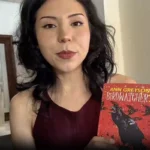
Photo: Alisse Lee Goldenberg, award-winning author and creator of immersive fantasy worlds, brings heart and depth to every story she tells.
A Princess Who Saves Herself and a World That Refuses to Stay Small
Alisse Lee Goldenberg discusses her evolution from classroom writer to acclaimed author, exploring how folklore, strong characters, and emotional depth shape her fantasy worlds and inspire readers toward courage and self-discovery.
A lisse Lee Goldenberg stands as a vibrant and fearless voice in contemporary speculative fiction, seamlessly weaving together the wonder of children’s literature, the tension of horror, and the emotional depth of young adult fantasy. With an imagination rooted in a lifelong passion for folklore and storytelling, Goldenberg has crafted richly layered worlds that invite readers not only to escape, but to reflect, to question, and ultimately, to grow. Her work resonates with an authenticity that speaks to both younger audiences discovering their strength and adult readers who remember what it felt like to search for it.
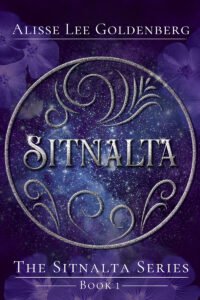
At the heart of her storytelling lies The Sitnalta Series, a compelling journey that transforms a seemingly classic fairy tale premise into something far more profound and empowering. Goldenberg redefines heroism through a protagonist whose courage is not measured by physical might, but by conviction, empathy, and the determination to challenge the world as it is. Her narratives are textured with moral complexity, nuanced characters, and an emotional honesty that elevates her work beyond genre expectations.
What makes Goldenberg particularly remarkable is her ability to balance imaginative world-building with deeply human themes—freedom, identity, and the quiet, often difficult pursuit of self-discovery. Whether exploring the shadows of a complex antagonist or the tender resilience of a young heroine, she writes with a clarity of purpose and a respect for her readers that is both refreshing and inspiring.
In this issue of Novelist Post, we are proud to feature an illuminating conversation with Alisse Lee Goldenberg. Her insights into the creative process, the evolution of her characters, and the discipline behind building immersive worlds offer invaluable inspiration for writers and readers alike.
Alisse Lee Goldenberg is a masterful storyteller whose imagination, emotional depth, and originality elevate modern fantasy to inspiring new heights.
Interview Highlights
- The Sitnalta Series began as a classroom assignment and evolved into a multi-book saga
- Goldenberg emphasizes never discarding early writing ideas
- Her stories challenge traditional “rescued princess” tropes
- Sitnalta’s strength comes from moral courage, not physical power
- Villainy is explored through complex, unapologetic motivations
- Themes of freedom and identity are central and intentional
- World-building relies on consistent rules and detailed planning
- Writing style adapts based on audience age and genre
- Reader reactions are the most rewarding part of her work
- Editing and community feedback are essential for aspiring writers
What first inspired you to create the world and characters of the Sitnalta Series?
The Sitnalta Series initially began as an in-class short story assignment. From there, it was as if the characters I’d created refused to leave me alone! As I grew, they grew with me. Their lives became more and more complex, and their world grew larger and more complete. I knew that I had to get in all out on paper, so what started as a short story for my English teacher grew into a novel, and that novel grew into a series of novels.
This just goes to show you that you should never throw out a piece of writing, and you should always keep your old assignments! I got an ‘A’ by the way.
“The characters I’d created refused to leave me alone.”
– Alisse Lee Goldenberg
How did your interest in fantasy and folklore influence the story and mythology within the novel?
At its heart, the story of Sitnalta is a bit of a fairy tale. Young princess wanders the woods and encounters a troll. It’s a princess story, but it’s one where the princess has to learn her own strength and starts with her saving herself. Also, the troll isn’t the fearsome creature that you expect to be lurking under a bridge or carrying off the young maiden. Here, the monsters are far more man-shaped and far less magical. I always loved the stories where there was more to it than just a morality tale where the main character needs rescuing, so that’s what I set out to write. Like so many coming of age stories, the hero doesn’t start off knowing or understanding their own strength, or what they may be capable of. It’s a journey, and one that I ended up mapping out over the course of five books.
“You should never throw out a piece of writing.”
– Alisse Lee Goldenberg
Princess Sitnalta is a strong and determined character. What inspired you when developing her personality and journey?
Sitnalta is inspired by the characters I grew up loving to watch and loving to read about. There’s a bit of Alanna of Tortall, a bit of Gwen from The Hunter’s Moon, and even a bit of Anne Shirley thrown in there. But she is also very much herself. She’s not a sword fighting, punches thrown sort of heroine. She’s a bit more of a hero whose power lies in the ability to stand up for what’s right. Her power lies in her heart, and in her desire to make the world what she thinks it should be, rather than what it is. That’s the sort of bravery and heroism I think lies in all of us and can be aspirational.
King Supmylo is a particularly dark and complex antagonist. How did you approach writing such a villain?
The one thing I wanted for Supmylo was to know that he has his reasons for why he acts the way he does, but that he is also unapologetic for it. He doesn’t see his behaviour as wrong. He’s the king. How can he be wrong? And that is what makes him so villainous. He acts as he does simply because he can. Yes, his upbringing wasn’t pretty, but I believe that just because you had bad experiences in the past, just because you were hurt, that doesn’t give you license to treat other poorly. Supmylo doesn’t get that. He has no concept of empathy, and so, he leans into his cruelty and becomes the villain he is.
The novel explores themes of freedom, courage, and identity. Were these themes intentional from the beginning?
They were. In essence, this is a story about finding the strength to chase after your freedom. Sitnalta does this from the beginning, and in doing so, she sets off a chain reaction of other characters finding ways to go after theirs as well. Aud, her governess, was trapped by her desire to care for the princess, and so never got to truly live her life. Najort the troll was trapped as the coin’s guardian and was stuck alone in the forest. Ipsinki, Supmylo’s captain is trapped in employment by this tyrant. Sitnalta’s one act of running away in the beginning of the novel sets up ways for all these people to decide if they want to remain trapped or find the courage to seek freedom and happiness.
The magical forest and the character of Najort the troll add a unique dimension to the story. How did you develop these fantasy elements?
When creating the world of Sitnalta, I looked at what the rules were. Every fantasy world needs guidelines of how it works, what the magic will look like, and who can live within it. For Sitnalta, this world includes wizards and trolls. From there, I looked at where these elements fit in, and how they would work within the framework of Colonodona. Najort is a special character. He is the catalyst for opening Sitnalta’s eyes to her world outside the castle, and to what friendship can be. In some ways, he is also far more human than her father.
Your work spans several genres, including children’s literature, horror, and young adult fantasy. How do you adapt your writing style for different audiences?
Well, there are certainly language constraints in what’s permissible in children’s literature and young adult, vs. what I can say or do in an 18+ zombie novel. One of the main things I have to adapt is what I can have characters say and do. And while some I do have some light violence throughout the Sitnalta Series, or The Dybbuk Scrolls Trilogy, a lot of it is focused on characters’ reactions to what’s happening, or cut aways, as opposed to being graphic about it, or overly bloody. It’s not really censoring my work, it’s more the difference between, for example, a pirate show like One Piece vs. one like Black Sails.
As an author working on multiple series, how do you organise your ideas and maintain consistency across different story worlds?
I keep lists of characters, world locations, rules for magic where necessary, and concise plot points that are all readily available whenever necessary. It’s sometimes as simple as who has what eye colour, who’s related to whom, things like that. It’s often not necessary, as this is my sandbox that I play in, but sometimes, details slip. I know that readers are very good at noticing any and all errors, so I am wary. I also like to reread previous instalments before doing more writing. It’s also a good way to keep style consistent as well.
Did any part of the preview scene—particularly Sitnalta’s longing for freedom—reflect themes or emotions you wanted young readers to connect with?
I think that the desire for freedom is something most young people can connect with. My own children and their friends all seem to be in this race to grow up and to fly off on their own. It’s something that parents also want to slow down as much as possible. But hopefully, most kids out there aren’t in Sitnalta’s shoes, and can wait a bit before striking out and find their freedom.
What has been the most rewarding part of writing the Sitnalta Series so far?
Definitely the reaction from readers. It’s been wonderful seeing people identifying with her story and finding ways to connect with her world.
What writing tips would you give to aspiring authors who want to create their own fantasy worlds?
Be consistent. Put time into the little details and build the world from the ground up. Other than that, go for it! Unleash that creativity and put it out there!
What general advice would you offer to aspiring authors who hope to publish their work one day?
Don’t slack on the editing. Once you have that story, make sure that it is as polished as possible. Don’t be afraid to show it to others. Get more eyes on it than just your own and find other writers you trust and share it around. There’s a great village of creatives out there, find them, and see what you can do.
Editor’s Note
Goldenberg crafts a gripping, atmospheric escape. Sitnalta is a spirited heroine, while the endearing Najort adds genuine heart and mystery.
Sitnalta escapes a forced marriage to an aged king, fleeing her monstrous father, Supmylo. Venturing into a magical forest, she teams up with Najort the troll. This high-stakes YA fantasy balances grit and whimsy, delivering a fast-paced tale of a princess reclaiming her agency against a truly loathsome, power-hungry villain.