











Mary Jo Thayer Writes Stories That Illuminate Trauma, Faith, and the Enduring Power of Redemption
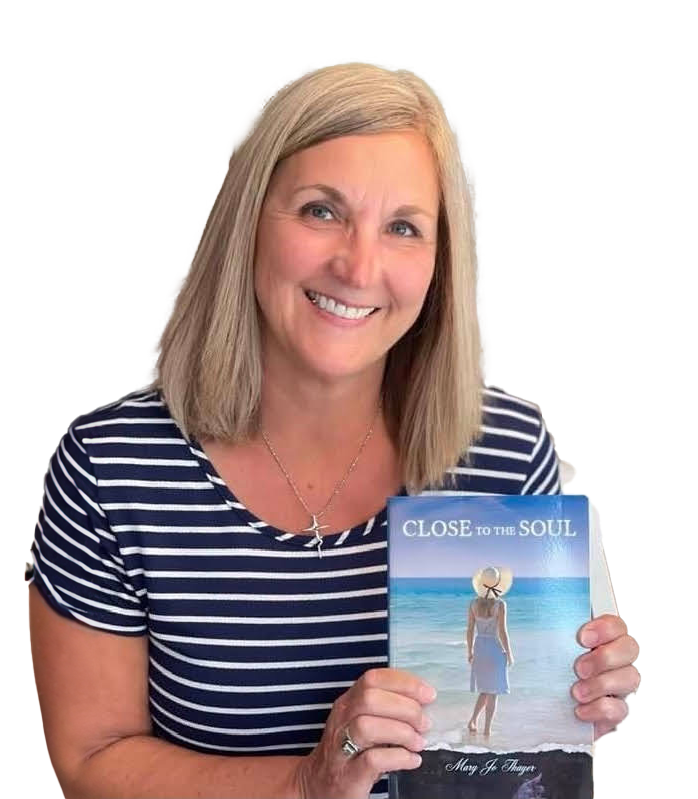
Mary Jo Thayer, award-winning author and speaker, captures stories of resilience, faith, and redemption with heartfelt authenticity.
A Story Of Trauma Faith Healing And Courage
Mary Jo Thayer discusses her inspiration, faith, and teaching background, revealing how they shaped her emotionally powerful novel about trauma, redemption, resilience, and the human capacity for healing.
M ary Jo Thayer arrives in the literary world with the rare combination of moral clarity, emotional intelligence, and narrative courage. Beginning her novel-writing journey at 55, she defies the notion that creative callings are bound by age, instead embodying the idea that the most powerful stories often emerge from a life deeply lived and thoughtfully examined. Her work is not simply fiction—it is a vessel for truth, compassion, and the quiet resilience of the human spirit.
Thayer’s debut novel, Close to the Soul, did more than capture readers’ attention—it demanded their reflection. Tackling the harrowing subject of sexual trauma with unflinching honesty and profound empathy, she crafted a story that resonates far beyond its pages. The novel’s success as a #1 New Release Best Seller and the 2021 Winner of the American Fiction Awards in the Christian Inspirational category speaks not only to its literary merit but to its emotional necessity in a world still grappling with silence around such experiences. Her storytelling neither sensationalizes nor simplifies; instead, it honors the complexity of pain while illuminating the path toward redemption.
Drawing from her years as a moral theology educator and mentor, Thayer brings a depth of insight that elevates her fiction into something deeply restorative. Her characters are not merely imagined—they are lived-in, shaped by the kinds of struggles and questions that echo in real lives. Faith, in her hands, is not abstract doctrine but a lifeline—steady, tested, and ultimately transformative.
With her forthcoming novel, Running Out of Sand, Thayer continues to explore the intricate terrain of guilt, accountability, and healing. Readers can expect the same emotional authenticity and spiritual undercurrent that defined her first work, paired with an even broader exploration of the human condition.
This conversation with Mary Jo Thayer offers a compelling glimpse into the mind and heart behind the Sand and Soul Series. It reveals a writer committed not only to storytelling, but to truth-telling—one who understands that literature, at its best, does not just entertain, but heals, challenges, and endures.
What inspired you to write Close to the Soul and explore such a difficult subject matter?
I grew up in a neighborhood during the sexual revolution with older kids who were wise to the world. Fortunately, or unfortunately, some were eager to share their knowledge with me. I learned about rape in seventh grade. In high school, a few girls I knew became pregnant. Instant empathy filled my heart, along with an interest in the psychological impact of sexual behavior.
How did your background in teaching and theology influence your writing style and themes?
Throughout my tenure as a high school teacher and coach, and later as a women’s mentor, I realized that many women carry secret wounds, often for years. People raised in religious environments are not immune to evil, and it is particularly damaging when the unwanted advances come from love interests, family members, educators, coaches, and clergy. Sin knows no bounds. But there is redemption for those who believe, want to be healed, and are brave enough to do the work. I want their stories and victories to be told because I believe there is always hope, regardless of the circumstances.
What kind of research did you undertake to portray the emotional and historical context of the Vietnam War era accurately?
I had two brothers who served during the Vietnam Conflict. There was a lot of talk around my house about the war, and the television was on nearly constantly. I remember the return of active-duty troops and their inability to speak of the horror. This gave me the emotional framework. Our social studies units in junior high school in 1972 focused on the presidential election, primarily the candidates and their stance on war and justice, along with the mistreatment of our Vietnam veterans. This gave me the historical context. Further research led me to post-traumatic stress syndrome and the effects on the parents and spouses of those who served.
How did you approach writing a character like Carolyn with authenticity and sensitivity?
My empathic nature played a big role. A high school friend had to move away to a safe place to have her baby. Later, I had students in precarious situations. These girls were often harshly judged, and it stirred in me a “righteous anger.” My research on pregnancy homes in the 50s and 60s made me realize that the severest cases of mistreatment could be classified as criminal. To be authentic, I needed Carolyn to experience the harsh judgment of the time. However, because my story is also one of redemption, Carolyn had to rely on her faith and find the good people in her life.
What challenges did you face while writing about trauma and recovery?
At times, I became so emotional that I had to take time to cry for Carolyn. I saw in her all those girls I knew who experienced an unwanted pregnancy. I saw in her the young women who come to our local pregnancy center for a piece of that hope and healing. I needed my words to be just right, which took a lot of finesse because I didn’t want to be presumptive about the effects of trauma.
How has your journey as an educator shaped your perspective as a novelist?
As an educator, I believe that good literature elevates the human spirit to aspire to more than our base humanness. I hope that my readers find themselves immersed in the dilemmas and hearts of my characters. I hope they cheer them on and maybe even learn something along the way.
What message do you hope readers take away after finishing your book?
As the reader turns the last page, I hope the story continues to make them ponder the human heart.
How did your faith influence the narrative and character development in your novel?
Christ is my rock. I am blessed to be a lifelong Catholic who has studied enough history to keep me in the Church. I understand that while the human side fails, the divine entity never will. Carolyn Fandel knows this, too. I like to say that she understands me, and I understand her. Her faith, too, takes precedence, which is good because it is her trust in God that saves her from utter brokenness.
Can you describe your writing process, from initial idea to final draft?
My stories start in my head and heart. They take shape as I am typing. I do not map or outline. A book often takes years from start to finish. Part of the reason is that people will always come first in my life. Once I feel the draft is good enough, I submit it in hopes of a contract. The manuscript then goes back and forth several times through a developmental editor, some beta readers, copy-editing, and proofreading. From idea to publication is an exercise in perseverance and patience for all involved in my writing journey.
How has the response from readers impacted you personally and professionally?
Reactions to Close to the Soul have been overwhelmingly positive. To hear that readers love the story and want more from me means the world. My following continues to grow. But by far, the most meaningful feedback is when readers, both men and women, take time to tell me that Close to the Soul healed them from a wound they had been carrying. To God be the glory!
What can readers expect from you next?
The second novel in my Sand and Soul Series, Running Out of Sand, will be released later in 2026. Silvester Fandel, Carolyn’s older brother, had heard a rumor of rape one year before she was raped and never told anyone. Then, his sister is raped by the same guy. Silvester’s guilt over that mistake, along with another tragedy, leaves him coping with his remorse in the quickest way possible—alcohol.
What writing tips would you offer to aspiring authors looking to tell meaningful and impactful stories?
Write from the heart. Do not follow another author’s formula. The reader must hear your voice. Learn how to “show” and not just “tell.” Do your research. For example, if your story is trauma-related, do your readers a favor and research PTSD.
What advice would you give to aspiring authors who are just beginning their writing journey?
Start writing. Your story will not tell itself. Before long, though, research how to write the kind of story you wish to tell. Join writing groups in your local area or online. Find someone to beta-read for you early on. Be willing to accept criticism and take direction. The journey to publication often takes years. A good story will find its way.