













Clayton Graham Expands the Boundaries of Science Fiction Through Cosmic Imagination and Scientific Insight
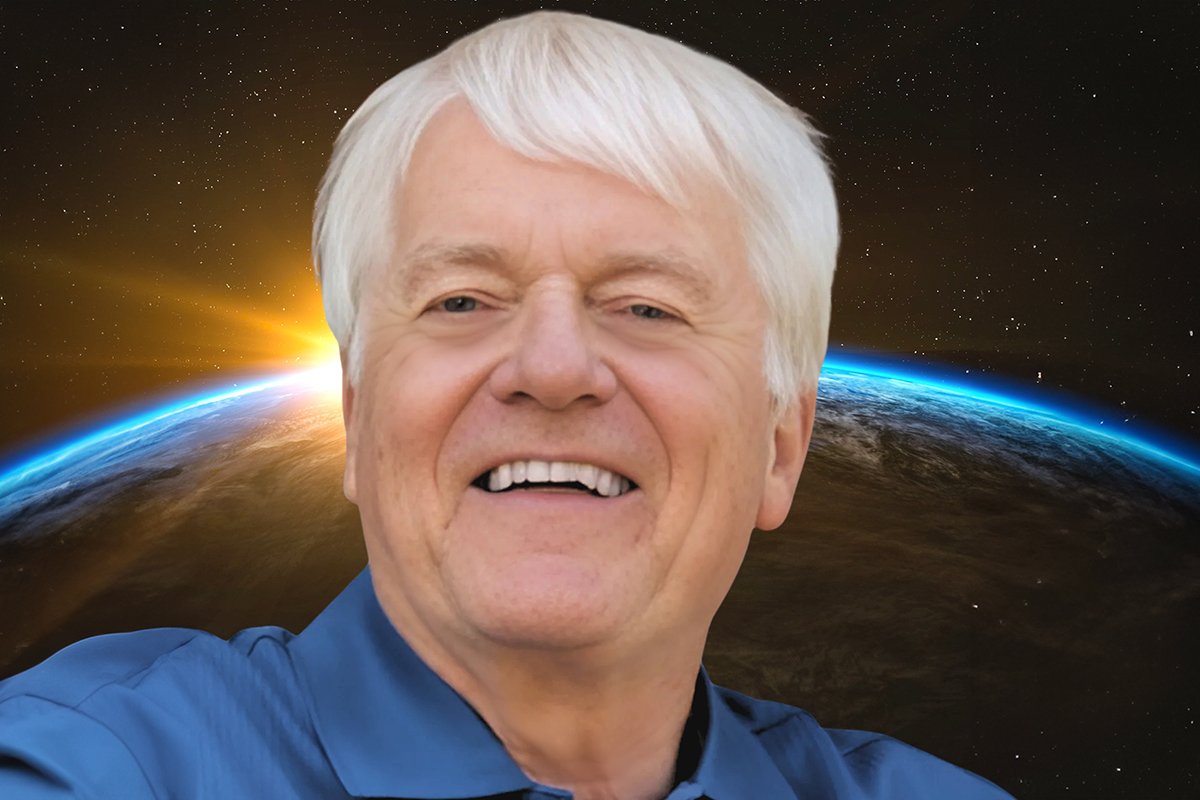
Author Clayton Graham, acclaimed science fiction novelist, known for his Milijun universe and thought-provoking interstellar storytelling.
Cosmic Worlds, Alien Empathy, And The Future Of Human Understanding
Clayton Graham discusses his aerospace-influenced science fiction, alien civilizations, interdimensional themes, and philosophical ideas about humanity, empathy, and survival across galaxies in his Milijun universe and Those Alien Skies novellas.
C layton Graham stands as one of contemporary science fiction’s most compelling voices, a writer whose imagination is firmly anchored in both scientific curiosity and boundless cosmic wonder. From an early devotion to the ‘old-school’ masters—HG Wells, Jules Verne, Isaac Asimov, and John Wyndham—Graham has carried forward a tradition of expansive, idea-driven storytelling that stretches the limits of perception while remaining grounded in thoughtful inquiry. His award recognitions, including placement among Author’s Show ‘50 great writers you should be reading’ and finalist positions for the Readers’ Favorite International Award and Book Excellence Awards, reflect a growing international appreciation for his distinctive narrative vision.
What sets Graham apart is not only the scale of the universes he creates, but the intellectual depth that underpins them. With a professional background in aerospace engineering, he brings an analytical sensibility to his fiction—one that informs the intricate systems, speculative technologies, and plausibly constructed worlds found throughout the Milijun series and beyond. Yet, as he himself reflects, it is less a matter of direct influence and more an extension of an enquiring mind, one that naturally gravitates toward problem-solving, exploration, and the mysteries that lie just beyond human understanding.
Across works such as Milijun, Amidst Alien Stars, and the recent collection Those Alien Skies, Graham explores not only distant galaxies and alien civilizations, but also the enduring questions of empathy, survival, consciousness, and the human spirit’s indefatigable drive to seek meaning in the unknown. His fiction blends sweeping interstellar adventure with philosophical reflection, inviting readers to consider humanity’s place within a far larger cosmic tapestry. In this exclusive interview with Novelist Post, Graham discusses the inspirations, themes, and disciplined creativity behind his evolving universe—offering rare insight into a storyteller who continues to imagine not just new worlds, but new ways of understanding our own.
How has your background in aerospace engineering influenced the technical realism and world-building in your Milijun series?
My career in Aerospace was in the area of Design and Research. Although there is no direct relation between my work and my writing, working in aerospace did require an enquiring mind and the development of problem solving techniques. Maybe the building of literary universes grew from that! For the most part, the paranormal is the normal as yet unexplained.
Which of the ‘old-school’ masters like HG Wells or Isaac Asimov had the greatest impact on your decision to become a science fiction author.
There was no decision involved. My interest in science fiction came naturally from an early age. HG Wells and Isaac Asimov were authors I read avidly. They are totally different, including an obvious generation gap, but are both capable of ‘stretching the mind’ albeit in different directions.
In Amidst Alien Stars, what was the inspiration behind the specific biology and social structures of the extraterrestrial races Laura and Jason encounter?
‘Amidst Alien Stars’ is the second book in a First Contact trilogy. To understand the ‘mindset’ of the alien Rbuzen a reader should start with ‘Milijun’, the first novel in the series. The inspiration behind the biology and social structure of the three alien races on Glieze came from an extrapolation of our own role in the universe and our attempts to understand it; physically, metaphysically, and spiritually. For example the Rbuzen and the Gerb know that the afterlife is real—this they have discovered by their work on interdimensional travel. The third alien race introduced briefly in ‘Amidst Alien Stars’ is a Type II Civilization entity and thus well beyond our current understanding.
The fact that the Rbuzen and the Gerb struggle to live in harmony is a reflection of our own violent world, and seems particularly relevant in the twenty-first century.
How do you approach the challenge of creating ‘intergalactic empathy’ between humans and species that are fundamentally different from us?
Empathy comes from communication and mutual understanding, and in the case of the Rbuzen, a desperate need for universal survival. Eventually, humans and aliens need each other. They are part of creation, and their role is to enhance the universe, not to despoil it. To state the obvious, this is not as easy as it sounds, but is a necessity if worlds are to survive.
Your work often explores the ‘indefatigable drive of the human spirit’; do you believe humanity’s best traits would actually help or hinder us during a real first contact event?
A real contact event can come in many forms. Who can say for certain that it hasn’t already happened? 2026 has seen a surge in alleged unexplained NHI [non-human intelligence] occurrences. How a ‘confirmed beyond all reasonable doubt’ event would happen on Earth is harder to imagine. Humanity’s best traits are often extinguished by fear of the unknown. Above all else, there would have to be a spiritual awakening, a realization that we are a small part of a much larger living cosmos. And that recognition would have to be embraced. Only time will tell. We are not there yet.
The novella The Hunt for Elias Weber deals with mind propaganda; what drew you to explore the psychological aspects of control within a Martian setting?
‘The Hunt for Elias Weber’ is one of three novellas published in my latest release ‘Those Alien Skies’. Elias first came to prominence in the third of the Milijun trilogy ‘Alien Whispers: Conflict and Communion’. He was a ruthless leader within a powerful group who had taken over Earth following apocalyptic conflict. It is relatively easy to maintain a stranglehold on a beaten population. Has it not happened before on this planet? Elias is a true believer in the cause and the creeds of this new conglomerate, and he will not accept that things are changing, even after his capture on the moon and effective imprisonment on Mars. Obsession drives him and makes him dangerous. He wants things as they were, and once started on his quest there is no turning back.
How do you balance the ‘thrilling adventure’ of space opera with the ‘profound philosophical reflection’ mentioned by your reviewers?
That’s easy. It is in the nature of the beast. Nothing on Earth happens by complete chance. Coincidences are not coincidences. Humans are a wonderful creation, offered freedom to do as they choose in their particular surrounds. It is what they do with that freedom that counts. Good and evil are often woven together in a complex tapestry. It is up to us all to unravel it. Just go outside and look at a star-filled night sky. Listen to the universe.
As a lover of the natural world, how do you go about designing the ecosystems and ‘alien animals’ that inhabit planets like Glieze or Paludis?
Involving animals from another world is no different than writing about those on Earth. There are several ecosystems on Earth, and doubtless thousands upon other planets. Even here on Earth there are animals surviving in surrounds where humans could not. It’s not a long bow to extrapolate and engineer creatures in alien environments.
With your stories spanning multiple galaxies and dimensions, how do you keep the personal dramas and emotions of your characters grounded and relatable?
Basically by family connections. Meeting aliens is certainly challenging, crossing galaxies even more so. However, the human connection will never be broken. Earth is our mother planet [as far as we know] and links to this world will always be there as long as this planet exists.
Also never say never concerning a human-alien friendship! Aliens are likely different, but we may also share perspectives of creation and why we are here.
What are the main thematic links that tie the three novellas in Those Alien Skies together for you?
First of all, the stories are blessed with the characters from the Milijun Trilogy; my choice—I wanted to see what happened in their futures. In addition, the events are set in the ‘Milijun Universe’ and are created using that vast place and its cosmic array as a catalyst. Having said that, the novellas are entirely independent in plot, and can be described as standalone. They are three separate tales with family links, connections to the otherworldly [from the human perspective], and conclusions that most readers will revel in.
What practical writing tips can you offer to aspiring authors regarding the daily discipline of completing a full-length science fiction novel?
Write, check and rewrite. Then get your work professionally edited. Make a note of all your thoughts. Have a paper and pen by your bedside—I often wake up with ideas that I need to immediately record. Write only if you feel like it. Don’t make it a chore. Just enjoy.
Don’t try to complete the novel inside your head. Your characters will determine where it is going and what happens next. Give them free reign.
What advice would you give to aspiring authors who are looking to navigate the modern publishing landscape and build a dedicated readership?
That’s a hairy one! I’m a self-published author so I am biased. Getting your book on Amazon or Nook or any of the other digital publishers is relatively easy. Amazon, for example, will guide you all the way. And it’s free!
Beware of scam merchants. Always do a good search before you use alleged assistance.
If you really must look for a publisher for your work, be patient.
Once you have a book in the system create your own website and maybe a newsletter. Use dedicated outfits like Book Funnel or Story Origin. Be prepared for extensive marketing.