












- BESTSELLING
- Interview
- NY Times Bestselling Author
- USA Today Bestselling Author
- Wall Street Journal Bestselling Author
Meghan March Breaking Barriers and Inspiring Millions With Her Bestselling Stories
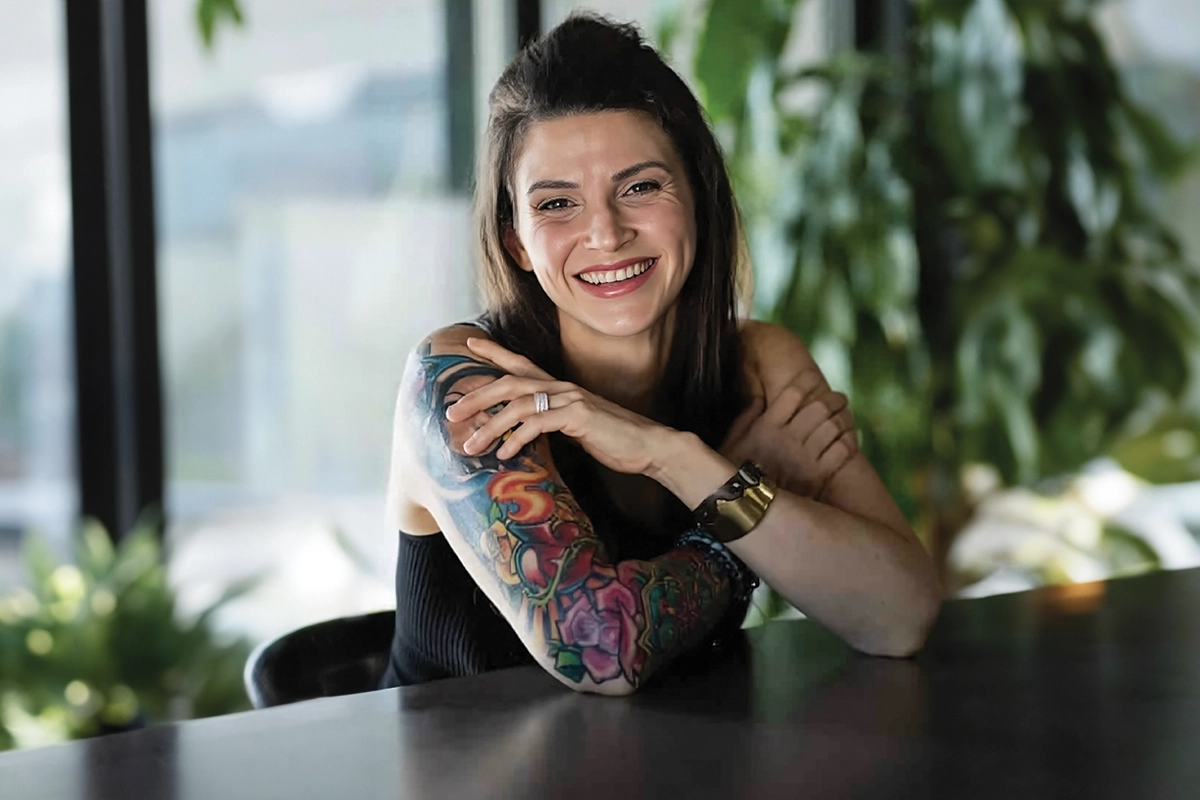
Photo: Meghan March, bestselling author and creative visionary, photographed amidst the breathtaking beauty of the Pacific Northwest—where inspiration meets storytelling magic.
From Lawyer To Literary Superstar
Bestselling author Meghan March shares insights on storytelling, nature’s impact on her creativity, the balance of realism and escapism, and her inspiring journey from lawyer to literary icon.
M eghan March is nothing short of a literary powerhouse. With an impressive catalog of over forty novels, her work has captivated millions across the globe, transcending language barriers and cultural differences. Meghan’s stories, brimming with vivid characters and raw, unapologetic emotion, have secured her a place on the coveted New York Times, #1 Wall Street Journal, and USA Today bestseller lists. But beyond the accolades, Meghan is a creative force whose passion for storytelling is exceeded only by her commitment to inspiring others. Her journey from corporate lawyer to bestselling author, and now embracing life as a dedicated farmer and merchant of positivity, serves as a beacon for those daring to chase their dreams.
The beauty of Meghan’s writing lies in her ability to weave personal insight, profound themes, and relatable experiences into every narrative. Whether drawing from the serenity of her time in Gratitude Gardens, or the rugged majesty of the Pacific Northwest, Meghan’s works are enriched with a depth and vibrancy that leave readers both breathless and inspired. Her unique ability to balance heart-pounding suspense with tender, authentic emotion has made her a master in her craft, and her influence in the literary world continues to grow with each new release.
An extraordinary storyteller, Meghan March captivates readers worldwide with her vivid characters, heartfelt emotion, and empowering personal journey.
In this exclusive interview for Novelist Post, Meghan shares insights that showcase her brilliance not only as an author but as a philosopher of life, a seeker of beauty, and an advocate for living with intention. Prepare to step into Meghan March’s extraordinary world—where nature’s cycles inform creativity, love transcends boundaries, and stories are planted and nurtured to bloom into unforgettable experiences.
Working in Gratitude Gardens gives you daily contact with plant biology. How have soil ecology, plant physiology, or the soil microbiome influenced imagery or metaphors in your books?
Gratitude Gardens has altered my life in every possible way. From metaphors to storylines to characters, the lessons learned in the garden, the berry patch, the fields, and the orchard have filtered into both my life and my creativity. The more I understand the rhythm of seasons, the bounty of harvests, the quiet times when invisible work is taking place beneath the soil, the more I am connected with the intangibles one often misses when simply focused on word count or finishing another book. Spending time with nature, studying it, observing it, learning its patterns and cycles, changes everything. I have grown far more patient with the creative process, and the richness of my work and the depth of characterization, imagery, and metaphor have all been affected in a positive way. I am more patient, more accepting of lulls in productivity, more understanding about why good things take time, and how the best things in life are often letting go and letting nature take its course.
When crafting intense attraction and conflict, do you draw on the biology of emotion, such as hormones and neurochemistry, to shape character behavior and pacing?
As someone whose formal training is in business and law, I relied completely on instinct and personal experience when writing conflict and human emotion. The most understandable human motives and reactions are those readers can relate to and have experience with in their own lives. I suppose the best way to analogize would be that while many people are comfortable and even skilled at driving a car, most have no idea about the mechanical processes behind how a car actually runs—and thankfully, they don’t need to know to drive.
The Pacific Northwest has a distinct ecosystem. Have seasonal cycles, native species, or local weather patterns informed your settings or plot rhythms?
I am currently working on two projects that have been deeply influenced by the scenery, flora, fauna, and weather of the Northwest. The misty spring and fall mornings and rainy days, craggy mountains with snow-capped peaks, evergreen forests rising up from crystal clear lakes, startlingly beautiful rainbows, and epic vistas have been woven into the tapestry of my soul and poured into my creative work. It is impossible not to be affected by the beauty that surrounds us every day. It is the very best kind of inspiration.
If you wrote a main character who is a biologist, which subfield would you choose and how would their scientific mindset drive the story?
Much of my writing comes from personal experiences and stories other people tell me about their lives and experiences. The easiest characters to write are those whose shoes I can easily step into and become. I could see possibly writing about a botanist who falls in love with the majesty of nature and chooses a simple life living and loving among the plants she has studied rather than returning to academia or industry. I could see the scientific, analytical, and rational mindset giving way to simple appreciation for beauty and the love of simply being part of nature.
How do you balance biological realism, for example injuries, recovery, sleep, and stamina, with the momentum readers expect in your romance and suspense arcs?
Biological realities are often one of the most challenging part of writing a gripping, page-turning story. Accuracy is key, because nothing pulls someone out of a story more quickly than a glaring mistake. However, one has to balance details with storytelling. One of the quickest ways to derail a wonderful story is to include too much “reality.” Readers are generally looking for an escape from reality, not heavy doses of the details in their romance and suspense. They want to suspend reality and be entertained, so the balance is delicate. I try to use these matters to add to and enrich the story—for instance, using sleep to help with pacing or ending a scene that would otherwise drag on into boredom or an injury to up the stakes and create more tension.
For your children’s books, have you considered using topics like pollinators, seed saving, or food webs to spark curiosity about biology in young readers?
Seed saving is near and dear to my heart, and I think there is a wonderful story waiting in the creative flow to share this vital concept with children.
Do you consult medical or scientific experts to check anatomy and health details, and what criteria help you decide when to simplify for narrative clarity?
I generally choose subject matter areas I have firsthand knowledge or can easily research as thoroughly as necessary using online resources. In romance, most readers aren’t looking for an abundance of technical health or scientific information–only what serves to enhance the story–so these methods have served me well in almost every case. However, when the story calls for it, I definitely consult necessary experts.
You took time to focus on health and spirituality. Did that shift your understanding of stress physiology and healing, and did it change how you portray embodiment and recovery on the page?
Focusing on health and spirituality in my personal life changed the stories I write and the characters within them greatly. As an author changes, the work changes. One cannot be separated from the other. The biggest change I noticed was how the goals and motivations of the main characters have been altered as a result. Changes in goals and motivations leads to different kinds of plots and completely different stories. It is certainly an ever-changing adventure.
Based on your path from lawyer to bestselling author and farmer, what experience-based advice would you share with emerging authors on building a sustainable creative practice and researching unfamiliar topics like biology without losing momentum?
The rhythms of nature and its seasons teach some of the greatest lessons one can apply to building a sustainable creative practice. It is not reasonable or natural to expect non-stop productivity and bountiful harvests. Even nature has built-in seasons of rest and renewal. You cannot force a plant to grow faster or produce more fruit. You can simply adjust the local conditions under your control for optimal growth and production. Recognizing what is within your control and what is feasible under the circumstances is wise when it comes to creative longevity. Careful nurturing will serve better, although indelible life lessons can be learned by pushing past all reasonable boundaries to total burnout. When it comes to research, don’t miss the forest for the trees. Keep the focus on what serves the story’s highest good. And remember—creating a well-written story that consumes a reader, tugs at their heart, and lingers in their mind is an art, not a science.

Editor’s Note
Meghan March crafts a captivating, steamy romance with rich characters, fiery chemistry, and a storyline that keeps you thoroughly engrossed.
“Dirty Pleasures,” the second installment of Meghan March’s “The Dirty Billionaire Trilogy,” is an intoxicating blend of passion, power, and emotional depth. Holly and Creighton’s fiery chemistry intensifies as their unconventional marriage blurs the lines between control and desire. Meghan March masterfully creates tension, emotional vulnerability, and scorching romance that keeps readers hooked. With a strong, independent heroine and a commanding yet complex billionaire, this book explores the challenges of love, identity, and compromise. A captivating, steamy sequel that leaves you eagerly anticipating the trilogy’s conclusion. Perfect for romance lovers seeking excitement and heart.